
9 Applications of Relief Valves
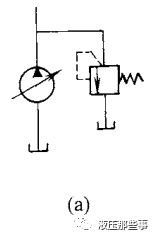
(1) As a safety valve, the overflow valve used to prevent hydraulic system overload is normally closed, as shown in Figure a. When the pressure in front of the valve does not exceed a preset limit, the valve closes without oil leakage. When the pressure in front of the valve exceeds this limit value, the valve immediately opens, and the oil flows back to the oil tank or low-pressure circuit, thus preventing overloading of the hydraulic system. Usually, safety valves are mostly used in systems with variable displacement pumps, and the overload pressure they control is generally 8% to 10% higher than the working pressure of the system.
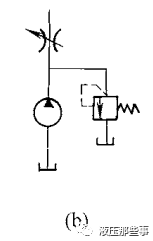
(2) As an overflow valve, it keeps the pressure in the hydraulic system constant in the quantitative pump system, in parallel with the throttling element and load, as shown in Figure b. At this time, the valve is usually open and overflows with oil. Depending on the amount of oil required by the working mechanism, the overflow amount of the valve varies from large to small to adjust and balance the amount of oil entering the hydraulic system, keeping the pressure in the hydraulic system constant. However, due to the loss of power in the overflow section, it is generally only applied to systems with small power and quantitative pumps. The adjustment pressure of the overflow valve should be equal to the working pressure of the system.
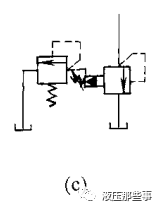
(3) Remote pressure regulation is achieved by connecting the oil inlet of the remote pressure regulating valve to the remote control port (unloading port) of the relief valve, within the set pressure range of the main relief valve, as shown in Figure c.
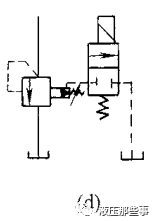
(4) As an unloading valve, use a directional valve to connect the remote control port (unloading port) of the overflow valve to the oil tank, which can unload the oil circuit, as shown in Figure d.
(5) For multi-level control of high and low pressure, the directional valve can achieve multi-level control of high and low pressure by connecting the remote control port (unloading port) of the overflow valve with several remote pressure regulating valves.
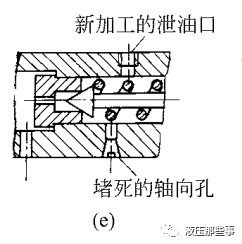
(6) For use as a sequence valve, the top cover of the overflow valve is machined into an oil discharge port, and the axial hole connecting the main valve and the top cover is blocked, as shown in Figure e. The overflow port of the main valve is used as a secondary pressure outlet, which can be used as a sequence valve.
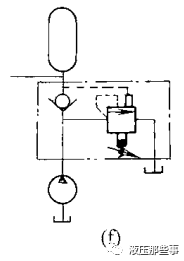
(7) The unloading overflow valve is commonly used in pump and accumulator systems, as shown in Figure f. When the pump is in normal operation, it supplies oil to the accumulator. When the oil pressure in the accumulator reaches the required pressure, the overflow valve is operated through the system pressure to unload the pump, and the system is supplied with oil from the accumulator and operates as usual; When the oil pressure of the accumulator decreases, the overflow valve closes, and the oil pump continues to supply oil to the accumulator, thereby ensuring the normal operation of the system.
(8) Act as a brake valve to cushion and brake the actuator.
(9) Act as loading valve and back pressure valve.